
 Login
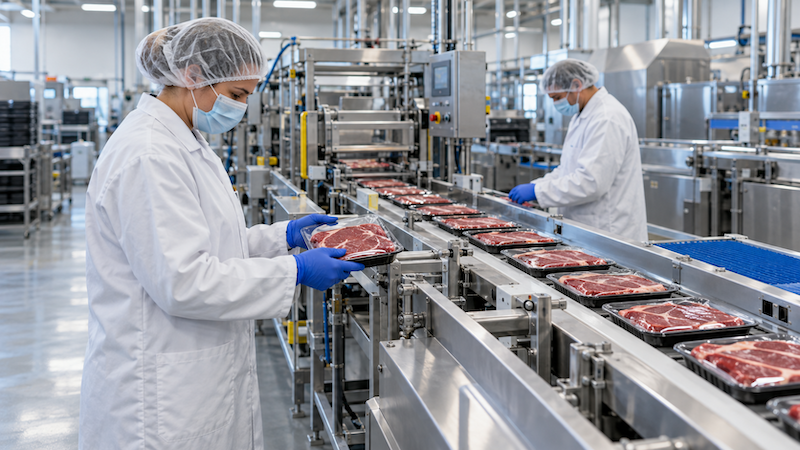
The new SPUR loan program could expand financing options for meat, poultry and seafood processors across the United States. On October 23, 2026, USDA announced at least $5 billion in loan guarantee authority for Strengthening Processing for U.S. Ranchers (SPUR). The program backs commercial loans with a 90 percent federal guarantee, allows loans up to $175 million, and has no rural location requirement. Yes, that means eligible processing facilities can be located in urban areas, too.
For businesses planning to open, reopen or expand a processing facility, the new program may offer financing options that were previously difficult to access. Here is what SPUR does, who may qualify, how the funds can be used, and why it matters for business owners and lenders.
What Is the USDA SPUR Loan Program?
SPUR is a USDA Rural Development loan guarantee program designed to add processing capacity and competition in meat, poultry and seafood. USDA describes the sector as particularly vulnerable to disruption, consolidation and concentration, and SPUR is intended to support independent and regional plants that diversify the supply chain.
The program came out of two executive orders. Executive Order 14424 directed USDA to create a guaranteed loan program for small and regional beef processors. Executive Order 14276 called for an America First Seafood Strategy, which is why seafood processing is included alongside beef, pork and poultry.
The legal authority is Section 1001(b)(4) of the American Rescue Plan Act, the same food supply chain resiliency authority USDA used for the Food Supply Chain Guaranteed Loan Program in 2021 and 2022. Loans are made and serviced under 7 CFR Part 5001, the OneRD guaranteed loan regulation, and USDA says SPUR is administered much like the Business & Industry (B&I) program, with a few changes for processors. Lenders that already know B&I will recognize the application, underwriting and servicing framework.
Who Is Eligible for the USDA SPUR Loan Program?
Location
There is no rural requirement. USDA states that both urban and rural areas are eligible and that there are no geographic restrictions. The facility only has to be located and operated in the United States. This is one of the biggest differences from B&I, where the project generally must be located in an eligible rural area. A processing plant on the edge of Oklahoma City or Dallas can qualify just as well as one in a town of 3,000.
Borrowers
Any individual or entity engaged, or proposing to engage, in meat, poultry or seafood processing may be eligible, including:
- For-profit and nonprofit businesses
- Cooperatives
- Indian Tribes
- State and local government organizations
Every borrower must operate under a USDA FSIS grant of inspection, a Cooperative Interstate Shipment (CIS) inspection, or an equivalent state inspection program. The business must be domestically owned, with a majority of owners who are U.S. citizens. Start-ups proposing to build a plant are eligible, as are existing operators.
Who Is Excluded?
- Any business, together with related businesses, whose market share is as large as or larger than the company with the fourth-largest share of the market. In other words, the big four packers and anyone their size are out.
- Entities or individuals with ownership or control who are nationals of foreign adversary countries, as defined in 15 CFR 791.4.
- The standard OneRD ineligible entities in 7 CFR 5001.127, such as borrowers with delinquent federal debt or a debarment.
How USDA SPUR Loan Funds Can Be Used
SPUR covers nearly every major capital need a processor may have. Eligible uses include, but are not limited to:
- Establishing, reopening, retrofitting, expanding or improving a meat, poultry or seafood processing facility, whether it sells into commercial markets or does toll processing.
- Buying and developing land, buildings and infrastructure for commercial or industrial use.
- Buying and installing machinery and equipment, and upgrading or renovating an existing plant.
- Manufacturing systems, IT systems and commercially available new technology that improves worker safety or food safety.
- Refinancing debt to improve cash flow and create jobs.
Borrowers must show that loan funds will stay in the United States and that the project will create new jobs or save existing jobs for U.S. residents.
How the SPUR Loan Program Could Benefit Processors
Processing facilities often require major upfront investment, take time to reach full production, and operate with tight margins. SPUR is designed to help lenders finance qualifying projects despite those challenges.
A 90 Percent Federal Guarantee
Every SPUR loan carries a 90 percent guarantee, leaving the lender with as little as 10 percent of the risk. B&I loans generally carry an 80 percent guarantee. The earlier Food Supply Chain Guaranteed Loan Program offered 90 percent only on certain fixed-rate loans, while SPUR applies the 90 percent guarantee without that pricing condition.
Financing for Large Processing Projects
The $175 million loan cap is more than four times the $40 million limit under the Food Supply Chain program and far above the standard B&I limit. A regional beef plant or a modern seafood facility can potentially be financed in one guaranteed loan rather than pieced together across multiple structures.
Time to Reach Full Production
A two-year deferral of principal and interest and terms up to 40 years can give a new or expanded plant time to reach full production before full debt service begins.
No Rural Location Requirement
Processors often locate near livestock, ports, labor and highways, and those areas are not always rural by USDA’s traditional definition. SPUR allows the project to locate where it makes the most business sense.
A Familiar Framework for Participating Lenders
Banks retain only 10 percent of the exposure, can sell the guaranteed portion on the secondary market, and work under the familiar OneRD rules rather than a completely new framework. That combination may bring lenders to the table that would otherwise pass on a processing deal.
At Least $5 Billion in Loan Authority
USDA has made at least $5 billion in loan authority available, and applications are accepted until funds run out. Well-prepared projects that move early may have the best opportunity to access the program.
How Businesses Can Explore SPUR Financing
Borrowers do not apply to USDA directly. A processor works with a participating lender, and the lender submits the guarantee request to Rural Development through the OneRD Guarantee process.
Applications are accepted year-round, beginning with the notice’s publication on October 27, 2026, until the funds are used up. USDA is also funding technical assistance providers with expertise in processing and business planning to help applicants prepare.
Applicants should be prepared to present a credible feasibility study, realistic financial projections, experienced management, adequate equity, and the required inspection status. Getting these materials organized early can help a lender evaluate whether SPUR is appropriate.
Discuss SPUR Financing with First National Bank of Oklahoma
At First National Bank of Oklahoma, we help businesses evaluate specialized government-guaranteed financing options. If you are considering a meat, poultry or seafood processing project, our team would welcome the opportunity to review your plans and discuss whether SPUR could be a fit.
Schedule a call to discuss your project.
Source Material
- USDA press release announcing SPUR (October 23, 2026)
- USDA Rural Development SPUR program page and FAQs
- SPUR FAQs for lenders and borrowers (PDF)
- SPUR fact sheet (PDF)
- Federal Register notice of funding opportunity and FY 2027 fees, FR Doc. 2026-21858
- 7 CFR Part 5001, OneRD Guaranteed Loan regulation
- OneRD Guarantee lender resources and application forms
- America First Seafood Strategy (PDF)
- Food Supply Chain Guaranteed Loan Program notice, December 2021