
 Login
Login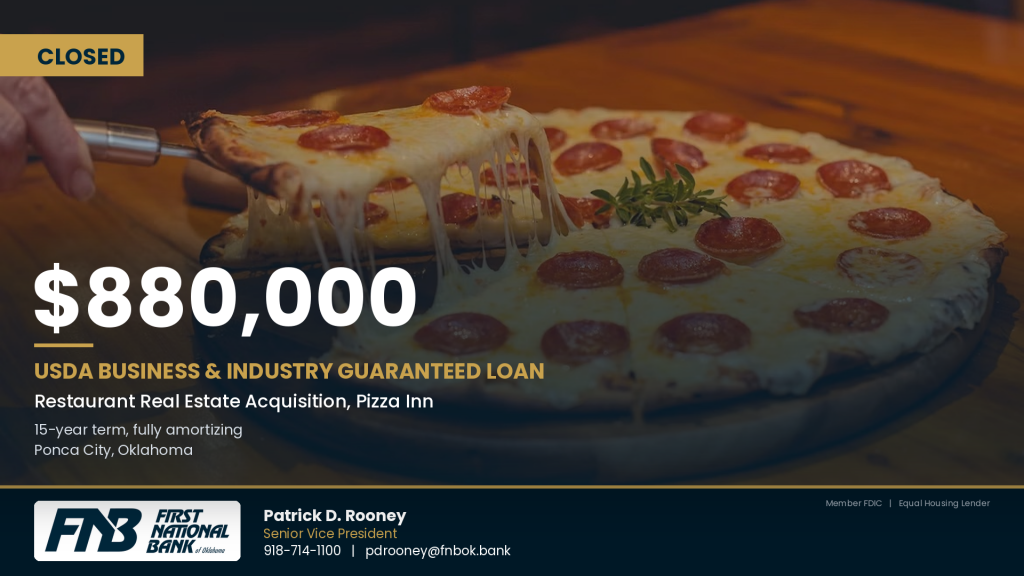
Restaurant real estate financing can give operators an opportunity to do more than simply secure a location—it can help them build long-term equity and create an additional asset alongside the restaurant business itself.
First National Bank of Oklahoma recently financed the real estate purchase of the Pizza Inn in Ponca City using a USDA Business & Industry (B&I) guaranteed loan. The financing allowed the existing operator, who has run the restaurant since 2024, to move from operating the Pizza Inn location to owning the underlying real estate.
For the Pizza Inn operator, that purchase represented an important strategic step: building what we often describe as a “second balance sheet.”
Why Restaurant Real Estate Ownership Matters
Most restaurant operators do not own the buildings where they do business. Approximately 95% of restaurant space in the United States is held for lease, which provides a useful indication of how uncommon restaurant real estate ownership can be.
There are practical reasons for that.
Restaurants are capital-intensive businesses. Startup capital can quickly be absorbed by:
- Build-out costs
- Kitchen and restaurant equipment
- Furniture and fixtures
- Inventory
- Working capital
Restaurants can also be challenging businesses to operate. Margins are often tight, operators have direct exposure to changing food and shipping costs, and competition can be intense.
Because of these factors, conventional financing sources may sometimes be cautious about extending additional credit to restaurant businesses—particularly when a significant amount of capital is already tied up in operations.
That can make purchasing the underlying real estate difficult, even when ownership may make strategic sense. For the Pizza Inn operator in Ponca City, specialized USDA financing helped create a path to make that ownership possible.
Building a “Second Balance Sheet” Through Restaurant Real Estate Financing
For restaurant operators who are able to purchase their locations, the real estate can effectively create a second balance sheet alongside the operating business.
That is exactly the opportunity created by the Pizza Inn transaction.
The restaurant itself generates revenue and carries its own operating assets and liabilities. The real estate, meanwhile, becomes a separate long-term asset that can build equity as the mortgage is paid down.
Real estate financing also typically allows an asset to be financed over longer terms than many operating expenses or equipment purchases.
Over a 15- or 20-year period, an operator who steadily pays down the mortgage may build meaningful equity in the property.
Eventually, that equity can create additional options.
An operator may choose to sell both the restaurant and the property. Or, when stepping away from restaurant operations, the owner could potentially retain the real estate and collect rent from a future operator.
For the Pizza Inn operator, purchasing the property is therefore about more than controlling today’s location. It can become part of a much longer-term financial strategy.
Real Estate Ownership Can Reduce Lease Renewal Risk
Owning the restaurant property provides another important advantage: it removes the uncertainty surrounding future lease renewals.
A restaurant can spend years building a loyal customer base around a particular location. When the lease eventually comes up for renewal, however, the economics can change.
A landlord in a strong real estate market is generally not obligated to renew a lease at the previous rental rate. Meanwhile, a restaurant whose customers associate the business with a specific location may have limited negotiating leverage because relocating could disrupt the business.
For an established restaurant like Pizza Inn in Ponca City, owning the real estate helps protect the operator from that uncertainty.
The operator controls the property, providing greater predictability around occupancy costs and reducing the risk that an important location becomes significantly more expensive—or unavailable—at the end of a lease term.
How a USDA B&I Loan Helped Finance the Pizza Inn Property
In this transaction, First National Bank of Oklahoma used the USDA Business & Industry Guaranteed Loan Program to finance the Pizza Inn real estate acquisition.
The financing allowed the restaurant operator to purchase the property while continuing to operate the existing Pizza Inn business.
Programs such as USDA B&I, SBA 504, and SBA 7(a) can provide valuable financing options for restaurant operators who want to purchase real estate but may not fit neatly within conventional commercial lending structures.
These programs can help qualified borrowers finance long-term assets while giving lenders additional support through government-backed guarantees.
For this Pizza Inn operator, USDA B&I financing created a path from operating the restaurant to owning the property beneath it—and beginning to build equity outside of the operating company itself.
What Other Restaurant Operators Can Learn from the Pizza Inn Deal
Buying restaurant real estate isn’t the right strategy for every operator or every location.
But the Pizza Inn transaction illustrates why ownership can be worth considering when the economics make sense.
Owning the real estate can help restaurant operators:
- Build equity over time
- Create an additional long-term asset
- Reduce exposure to future rent increases
- Avoid uncertainty at lease renewal
- Create potential retirement income or future sale value
- Strengthen their overall financial position beyond restaurant operations
For restaurant owners thinking about the long-term value of their business, the real estate underneath it deserves to be part of the conversation.
Considering Buying the Real Estate Behind Your Restaurant?
The Pizza Inn transaction in Ponca City is one example of how specialized financing can help an established restaurant operator move from leasing or operating a location to owning the underlying property.
Programs such as USDA B&I, SBA 504, and SBA 7(a) may create similar opportunities for qualified restaurant operators who want to purchase their locations and begin building that second balance sheet.
Our team at First National Bank of Oklahoma has significant experience working with these programs and helping business owners evaluate unique financing opportunities.
If you’re considering purchasing your restaurant property—or simply want to understand whether a financing structure like the one used for Pizza Inn could work for your business—contact our team today. We’d be happy to talk through your opportunity and help you evaluate the next step.